Why does gutter cleaning include a flush and flow-test?
Clearing debris doesn't confirm downspouts actually drain. A full flush and flow-test verifies water moves through the system before the crew leaves, catching clogs or separations that cause fascia rot and foundation water damage.How does Central New Jersey's tree canopy affect gutter maintenance?
Mature oak and maple throughout Rocky Hill and Belle Mead load gutters heavily every fall and spring. This accelerates fascia rot and foundation issues when gutters overflow, making twice-yearly clearing essential for wooded properties.What's the difference between soft washing and pressure washing for siding?
Soft wash uses low-pressure chemical application that kills mildew at the root system, preventing regrowth for months. Pressure washing only rinses surface staining, so mildew reappears within weeks and high pressure can damage siding and seals.How does pollen season affect solar panel efficiency in Central New Jersey?
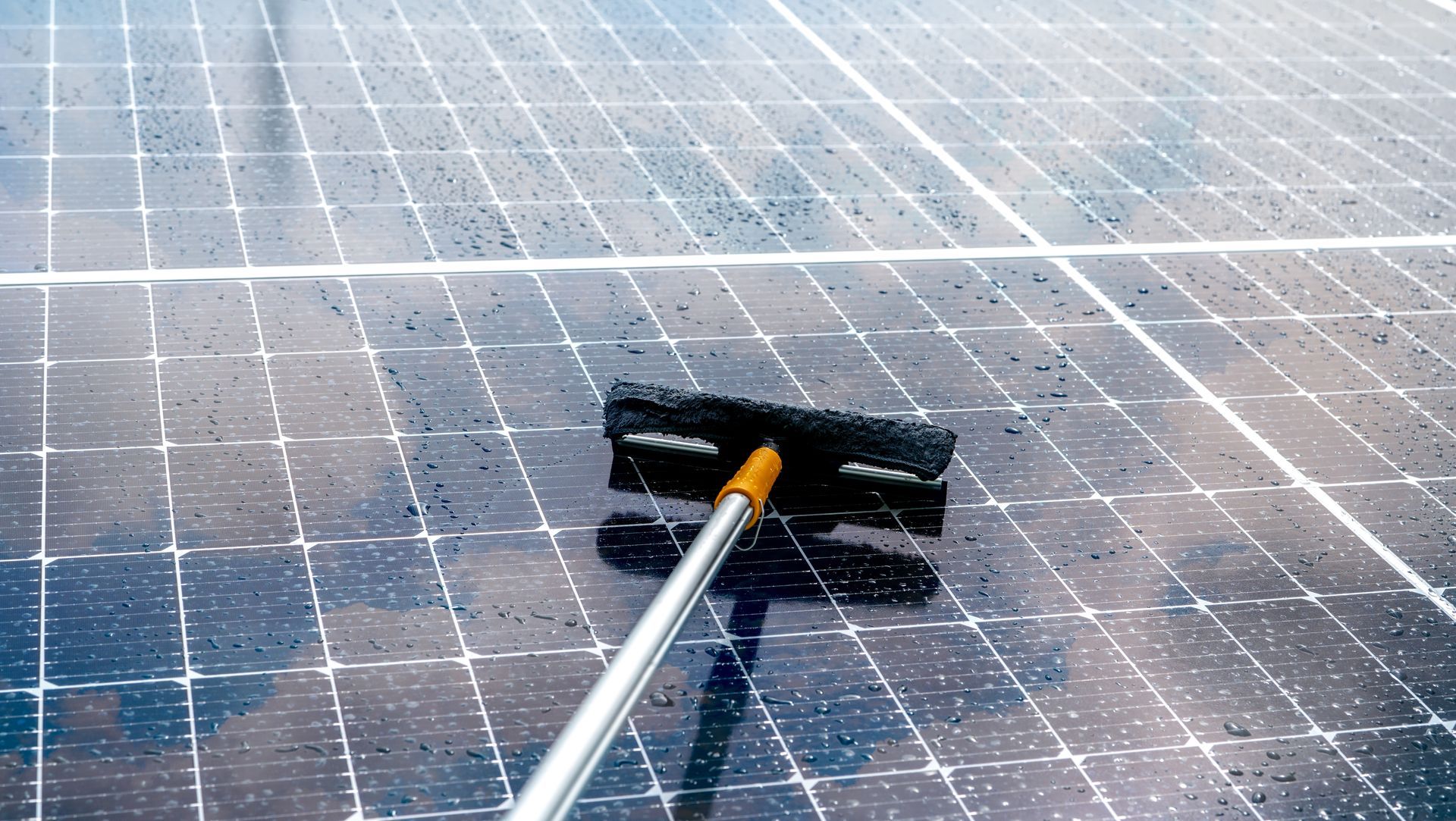
Spring pollen and summer humidity create a film that blocks light transmission and reduces measurable output. Low-pressure soft wash removes buildup without damaging panel coatings the way high-pressure rinsing does, restoring energy production.What causes black streaks on asphalt shingles?
Black algae streaking grows faster in humid climates and under tree canopy. Montgomery Township and Rocky Hill's dense shade and summer humidity accelerate growth, which shortens roof lifespan when left untreated.Can roof cleaning extend shingle life without voiding warranties?
Soft wash roof restoration removes algae and moss without the high pressure that voids shingle warranties. Treatment stops biological growth from degrading granules, extending roof life compared to leaving streaks untreated or using damaging pressure methods.Why do north-facing walls grow mildew faster in Central New Jersey?
North-facing surfaces stay shaded and hold moisture longer in humid climates. Wooded lots in Flemington and Belle Mead compound this with reduced airflow, creating year-round mildew growth that requires root-kill treatment rather than surface rinsing.What happens to pavers when the wrong pressure is used?
Excessive pressure washes out joint sand and etches surface texture, destabilizing pavers and creating uneven settling. Matching wash pressure to paver type protects joint integrity while removing algae and moss buildup from freeze-thaw cycles.How often should you clean gutters in areas with heavy tree cover?
Properties under oak and maple canopy need clearing twice yearly — once after spring seed drop and again after fall leaf drop. Skipping either season risks overflow damage to fascia and foundation during heavy rain.What's included in a full house wash?
All exterior elevations are cleaned in one visit using soft wash methods, covering siding, soffits, and trim. This prevents tide lines and mismatched patches that spot-cleaning leaves, addressing road dust, pollen, and humidity buildup across the entire footprint.Why do older Colonial homes need soft wash instead of pressure washing?
Painted wood, aged vinyl, and original masonry on older Central Jersey homes damage easily under high pressure. Soft wash delivers eco-friendly chemical cleaning at low pressure, protecting delicate surfaces while killing biological growth at the source.What makes solar panel cleaning different from window cleaning?
Solar panels require low-pressure methods that protect anti-reflective coatings and weatherproof seals. Standard window cleaning pressure or solutions can degrade coatings, reducing panel efficiency even after debris is removed.How often should solar panels be cleaned?
Most homes in Central NJ benefit from cleaning every 6–12 months depending on conditions.
Do you use chemicals?
No. We use purified water for a safe, residue-free clean.
Will cleaning damage my panels?
No—our soft brush and DI water system is specifically designed for solar panels.
Will I notice a difference?
In many cases, yes—especially if buildup has accumulated over time.
How is roof washing different from pressure washing?
Roof washing should not be done with high pressure on asphalt shingles. We use a soft wash process that applies a roof-safe cleaning solution and low-pressure rinse to remove algae, mold, mildew, and grime without the damage high pressure can cause.
Do you use chemicals?
No. We use purified water for a safe, residue-free clean.
Will roof washing damage my shingles?
When done properly, soft washing is the safe method for asphalt shingle roofs. High-pressure cleaning can shorten roof life, but a professional soft wash is designed to clean the roof without stripping granules or forcing water under shingles.
Does roof washing improve curb appeal?
Yes. A clean roof can make a major difference in how the entire home looks. Removing black streaks, moss, and surface staining gives the home a cleaner, newer, better-maintained appearance.
Is roof washing worth it if I am not replacing the roof soon?
Yes. Roof washing is often a cost-effective way to improve appearance and maintain the roof without the expense of replacement. It is especially valuable when the roof is structurally sound but stained.
How do I know if my roof needs washing?
Signs include black streaks, dark staining, green growth, moss, lichen, or areas that look dirty compared to the rest of the roof. If the roof looks stained but is otherwise in decent shape, washing may be the right solution.
Can you remove moss from the roof?
Yes, roof washing can treat and remove moss, algae, and other organic growth. Heavy moss may require extra attention depending on how established it is.
Why are there black streaks on my roof?
Those black streaks are usually caused by algae growth, most commonly Gloeocapsa magma. It feeds on the limestone filler in shingles and can make the roof look old, stained, and neglected.
How long does a roof wash last?
Results vary depending on shade, tree coverage, moisture, and roof condition, but many roofs stay cleaner for 2 to 4 years after a professional roof wash. Heavily shaded roofs may need more frequent service.
Can roof washing help extend the life of my roof?
It can help by removing algae, moss, and organic buildup that hold moisture against the roof surface. Cleaning does not repair an old roof, but it can reduce unnecessary wear from biological growth.
How long does the roof washing process take?
Most residential roof washes can be completed in a few hours, depending on roof size, pitch, access, and the amount of staining or buildup present.
Will roof washing kill plants or harm landscaping?
We take steps to protect surrounding landscaping before, during, and after the job. Professional prep, controlled application, and rinse procedures help reduce risk to plants and nearby surfaces.
What types of roofs can be washed?
Many roofs can be soft washed, including asphalt shingle roofs and other common residential roof surfaces. The exact method depends on the roofing material and condition.
How do I know if my gutters need cleaning?
Common signs include overflowing water, visible leaves and debris, clogged downspouts, and gutters that look full or heavy.
How often should gutters be cleaned?
That depends on the property, tree coverage, and how quickly debris builds up. Homes with more surrounding trees usually need more frequent cleaning.
Do you serve homes throughout Central New Jersey?
Yes, we provide gutter cleaning services throughout Central New Jersey.
Do you clear downspouts too?
Yes, gutter cleaning should include checking downspout flow and clearing blockages where needed.
Can clogged gutters cause water problems?
Yes. When gutters overflow, water can spill where it should not and create drainage issues around the home.
Can gutter cleaning be bundled with other services?
Yes. Many homeowners pair gutter cleaning with roof washing, house washing, or solar panel cleaning.