Biological Growth Eliminated at the Root
Algae and mildew removal in Flemington for roofs, siding, and outdoor surfaces on heavily wooded lots where shade and humidity accelerate regrowth
North-facing walls and shaded rooflines on Central Jersey's heavily wooded lots in Flemington and Belle Mead breed persistent algae and mildew growth year-round, with humidity season accelerating regrowth after surface-only rinsing fails to kill root systems. Treatment targets the organism's root system so surfaces stay clean significantly longer than a surface rinse or pressure wash delivers, addressing the biological contamination at its source rather than temporarily removing visible symptoms. Top Down Exterior Cleaning provides algae and mildew removal across roofs, siding, walls, and outdoor surfaces using root-kill treatment chemistry combined with soft wash delivery methods that prevent rapid regrowth and extend clean intervals between service visits.
The treatment process applies eco-friendly cleaning solutions formulated to penetrate beneath surface staining and reach the root structures where algae and mildew anchor into porous substrates like asphalt shingles, wood siding, and masonry. These solutions disrupt cellular function at the organism level, killing active growth and preventing spore reproduction that would otherwise regenerate visible staining within weeks of a standard pressure rinse.
Schedule a property evaluation to identify biological growth patterns and treatment coverage across affected exterior surfaces.
What Root-Kill Treatment Actually Accomplishes
Root-kill treatment uses specialized biocides that penetrate substrate pores to reach embedded root structures, breaking down the cellular anchors that allow algae and mildew to colonize exterior surfaces. The soft wash application method delivers these solutions at low pressure to prevent surface damage while ensuring thorough coverage across textured roofing, irregular siding profiles, and vertical masonry where biological growth concentrates in moisture-retaining crevices.
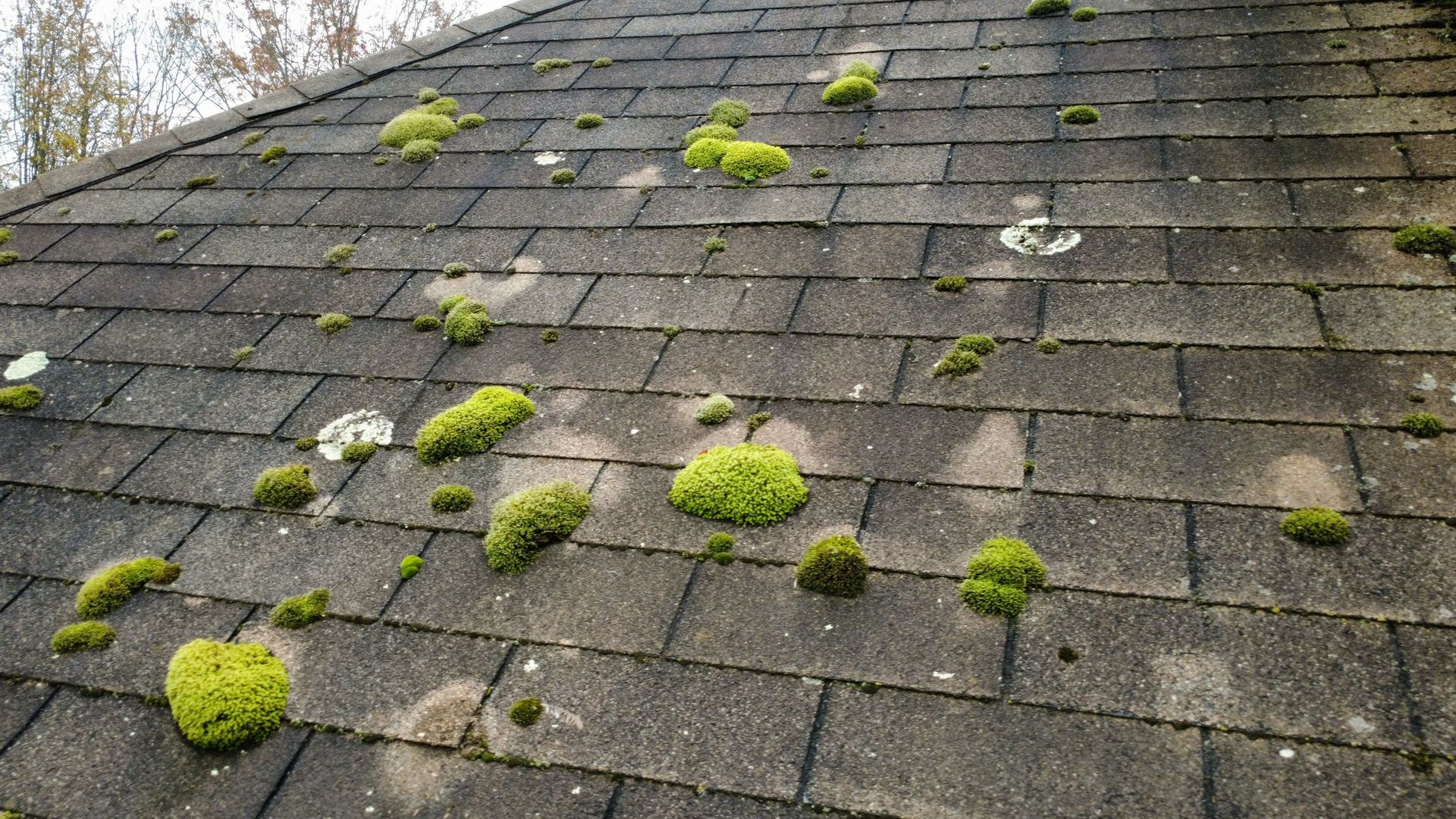
After treatment completes, you'll see black roof streaks disappear, green siding stains fade to original color, and white mildew deposits lift from shaded trim and soffits without returning for significantly longer periods than simple water rinsing provides. The difference becomes most apparent six to eight weeks post-treatment when neighboring properties cleaned with pressure washing alone begin showing renewed algae staining while treated surfaces remain visibly clear.
The method works particularly well on asphalt shingle roofs where black algae streaking indicates Gloeocapsa magma colonization, a photosynthetic bacterium that embeds into shingle granules and resists removal through mechanical cleaning alone. The eco-friendly treatment chemistry breaks down the protective coating these organisms produce, exposing them to degradation without requiring abrasive scrubbing that shortens roof lifespan.
Answers to Frequent Service Questions
Properties throughout Kendall Park, West Windsor, and Rocky Hill experience varying biological growth rates based on tree canopy density, roof orientation, and seasonal moisture exposure.
What causes algae and mildew to grow on exterior surfaces in Central Jersey?
Persistent shade from mature tree cover, elevated summer humidity, and moisture retention on north-facing elevations create ideal conditions for spore germination and biological colonization across roofing, siding, and masonry surfaces common in the region.
How does root-kill treatment differ from standard exterior cleaning?
Standard pressure washing or surface rinsing removes visible growth temporarily but leaves root structures intact within porous substrates, allowing regrowth within weeks, while root-kill chemistry penetrates to destroy anchoring systems and prevent rapid recolonization.
When should properties address biological growth before it causes material damage?
Treatment is most effective once staining becomes visible but before root penetration compromises substrate integrity, typically when black streaking appears on roofs or green discoloration spreads across more than ten percent of siding surface area.
What surfaces can safely receive algae and mildew treatment?
All exterior roofing, siding, trim, masonry, stucco, and painted surfaces tolerate soft wash treatment when proper solution concentrations and application pressures are matched to substrate type and contamination severity.
How long does treated surface remain free of regrowth after service?
Most surfaces stay visibly clean for eighteen to thirty-six months depending on shade exposure and moisture conditions, compared to three to nine months typical for pressure washing alone, because root-kill treatment prevents spore reproduction that drives rapid recolonization.
Top Down Exterior Cleaning provides fully insured algae and mildew removal using eco-friendly cleaners that protect landscaping and substrate integrity while delivering long-lasting contamination control. Request a free estimate to review growth patterns and treatment options specific to your property's exterior conditions.